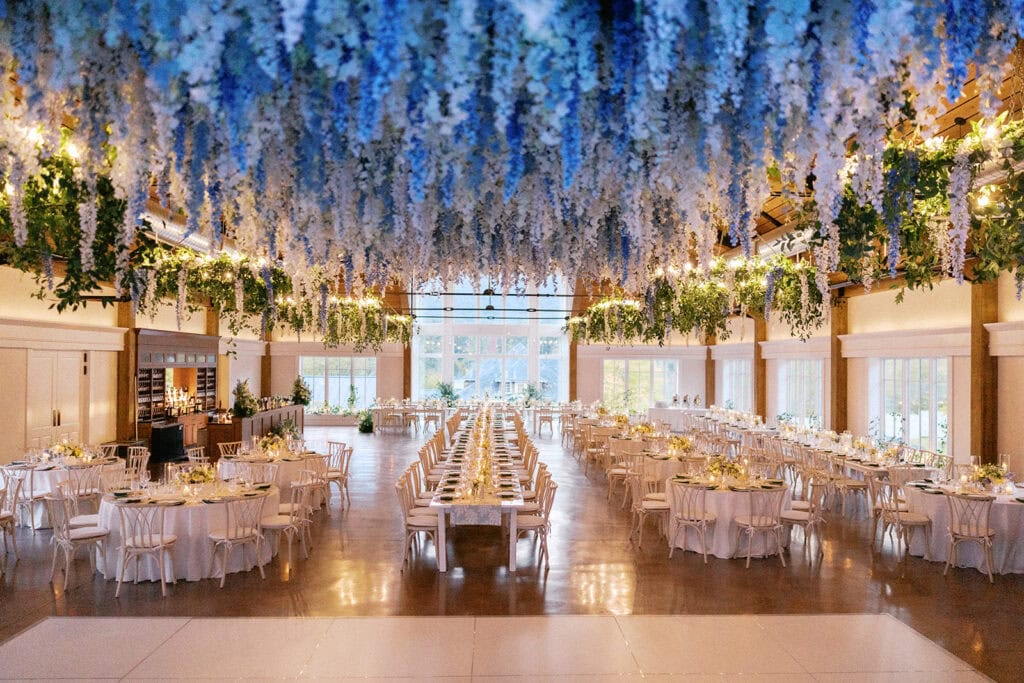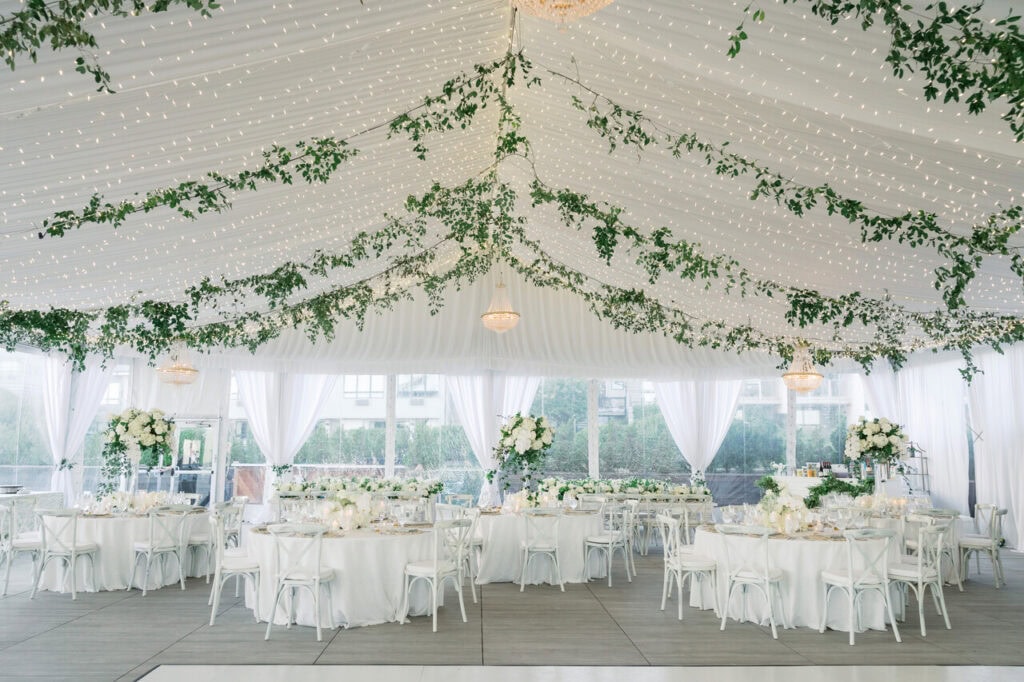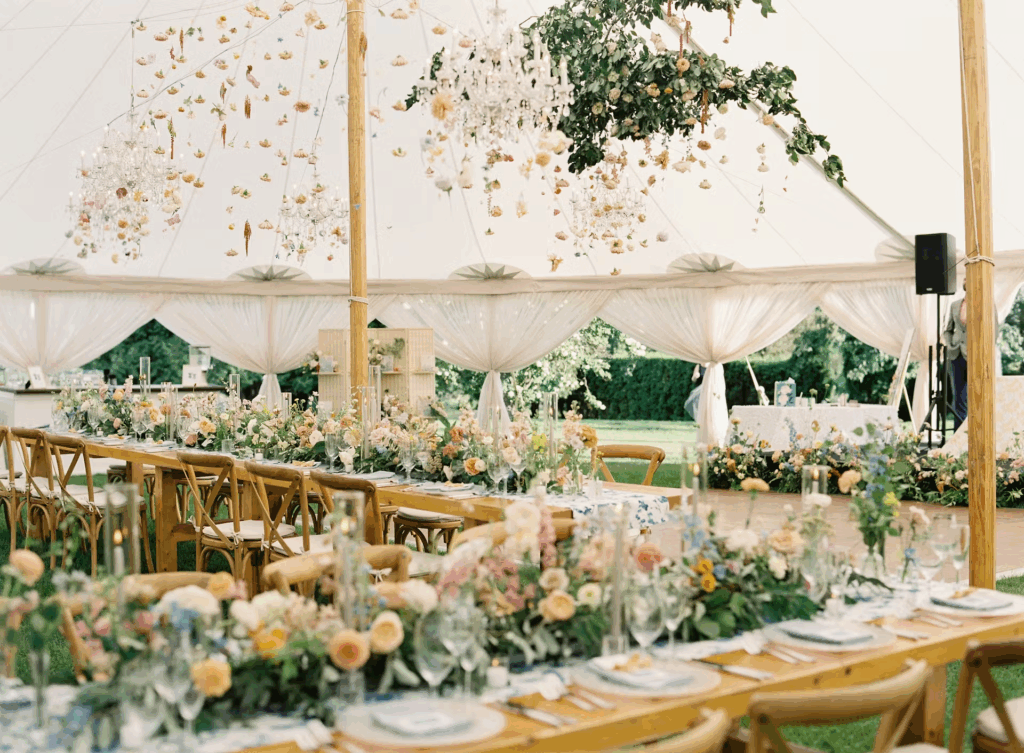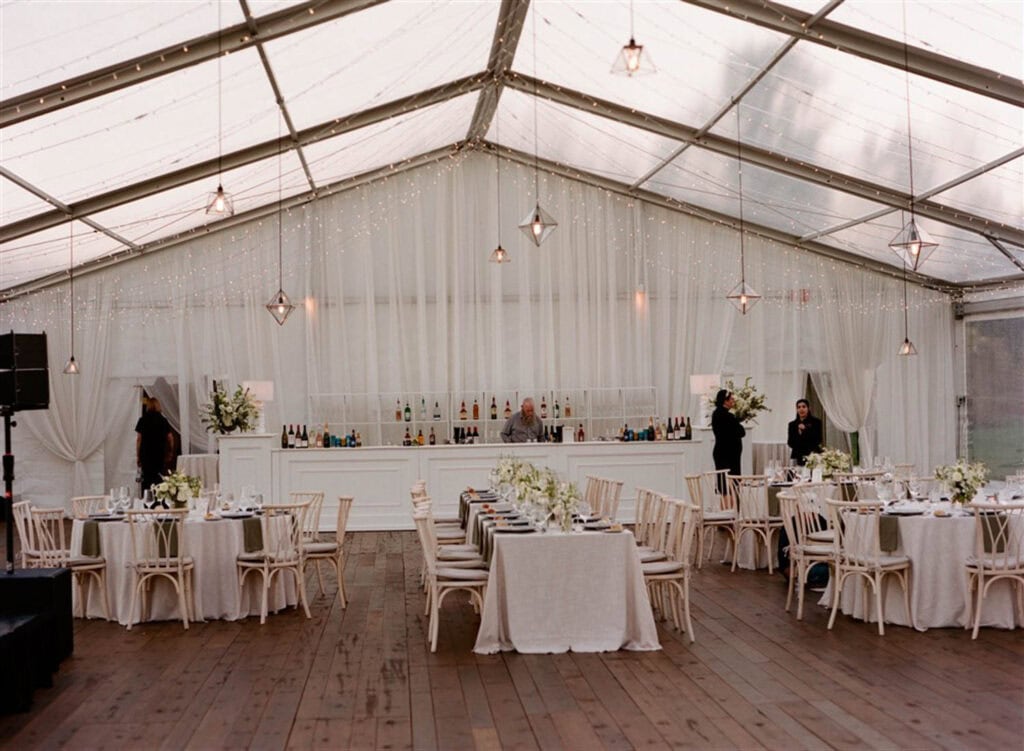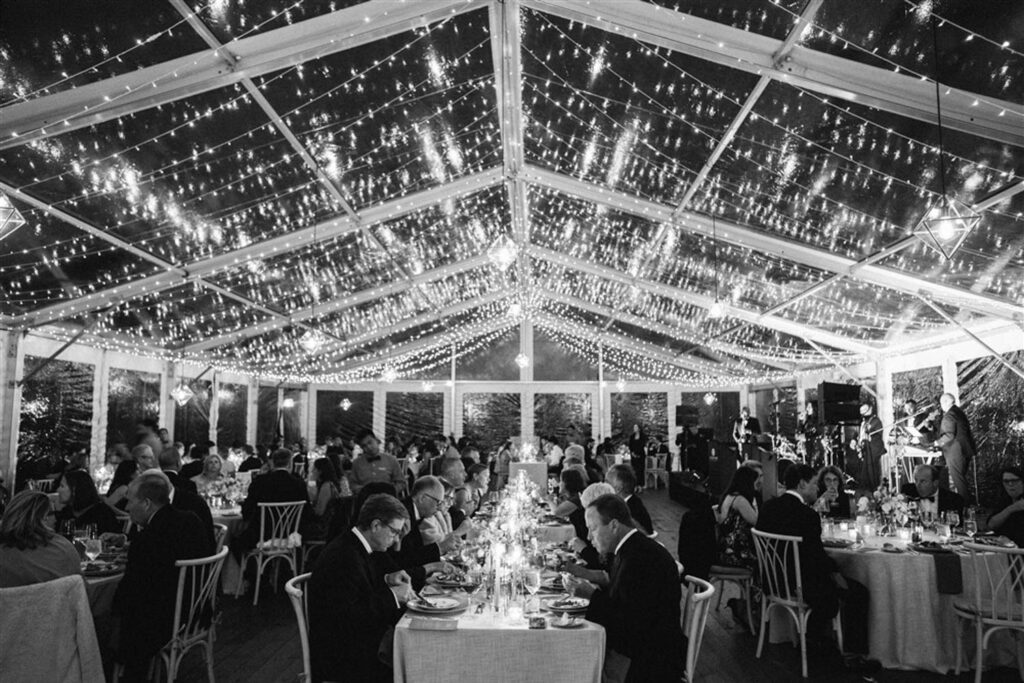

Private property weddings are drop-dead gorgeous.
They are also… a full build-out.
What I mean is that you are not just planning a wedding. You are creating a temporary wedding venue out of thin air for one weekend, which is magical. And also why planners probably age like presidents every tented event we have. HA!
So if you are dreaming of an estate wedding, a backyard tented wedding, or “my parents have land, and it will be so easy,” this is your friendly reality check.
Here is the private-property wedding logistics checklist you need to ensure your wedding feels luxurious and effortless, not chaotic and muddy.
1) The Site Plan
Aka: where everything goes, so no one panics
If your “plan” is pointing at the lawn and saying, “The tent will go… somewhere over there,” we need to talk.
Checklist:
- Map guest flow: parking to ceremony to cocktails to dinner to bathrooms
- Pick a tent location based on ground, drainage, wind, and access (not just the prettiest view)
- Mark vendor access routes so trucks do not destroy your landscaping
- Identify where the caterer will work (yes, they need their own build-out location.
- Confirm where guests will walk at night and light it accordingly. Grandma getting a broken ankle on the day of your wedding would not be fun.
2) Tent + Flooring
Aka: the difference between “romantic” and “mud wrestling.”
A tent is not “just a tent.” It is your reception space. Your ballroom. Your entire weather insurance policy.
Checklist:
- Confirm tent size based on layout, not guest count vibes
- Decide on a flooring plan (full floor, dance floor only, or none). I always recommend flooring your tent!
- Confirm anchoring plan (stakes vs weighted)
- Sidewalls plan for weather and comfort
- Tent build timeline locked in
Grass looks cute in photos until the heels sink, and now grandma just split her pants and broke a hip!
3) Power and Generators
Aka: the part where we stop pretending the house can handle it
Most homes cannot support the power needs for catering, lighting, music, and restrooms.
So when someone says, “Can’t we just plug into the garage?”
That’s adorable. No.
Checklist:
- Estimate power needs for catering, lighting, band or DJ, restrooms, heaters, or even fans
- Get a generator; your rental company will walk you through this. Emily at Vermont Tent does a fantastic job for JWE in finding exactly what we need.
- Distribution plan for where power drops go
- Backup plan for critical items (sound, catering, lighting)
If power is not handled professionally, everything else becomes a story you will tell for years. This is another reason to hire a planner like JWE: we understand all of this.
4) Restrooms and Guest Comfort
Aka: luxury is bathrooms that don’t feel like summer camp
This is where “high-end guest experience” becomes very real.
Checklist:
- Restroom count based on guest count and event length
- Placement that is close enough, but not in everyone’s face
- Lighting to and from restrooms
- Handwashing and supplies stocked
- ADA accessibility plan
- Servicing plan during the event
Here is the thing: guests will forget your napkins. They will not forget your bathrooms.
5) Parking + Transportation
Aka: how we avoid the “where do I go” chaos spiral
Parking can make your wedding feel organized or like a music festival with no signage.
Checklist:
- Parking location identified (flat, dry, easy in and out)
- Parking attendants, if needed
- Shuttle plan if the driveway is tight or the property is far from the road
- Clear signage plan
- Vendor parking is separate from guest parking, always
If you have a one-lane driveway, you probably need shuttles. This is not a debate.
6) Noise, Neighbors, and Town Rules
Aka: the town does not care it’s your big day
Private property weddings still need permits. Also, neighbors have ears, so let them know you’re throwing a party.
Checklist:
- Permits confirmed (tent, assembly, alcohol, fire)
- Noise ordinances checked and respected
- Neighbor plan (especially if the afterparty is late)
- Bonfire rules if you’re doing one
- Any road sign rules if guests need directions
Using the thought process of “We didn’t know” excuse is not a valid permit strategy.
7) Weather Plan
Aka: it won’t rain on our wedding day, so we don’t need to worry……
You need Plan A, Plan B, and sometimes Plan C.
Because Vermont. Or New England. Or honestly… Earth, in general, is unpredictable in its weather patterns.
Checklist:
- Rain plan for the ceremony and cocktail hour
- Wind plan (tents, florals, signage)
- Heat plan (shade, hydration, fans)
- Cold plan (heaters, sidewalls, blankets)
- Mud plan (flooring, matting, straw, boot wipes)
- Severe weather safety plan and decision maker identified.
8) The Weekend Timeline
Aka: your wedding is a production, not a dinner party
Private property weddings are often multi-day. That means more deliveries, more vendor coordination, more resets.
Checklist:
- Full weekend timeline with vendor input
- Quiet hours and reset windows
- Delivery and pickup windows coordinated
- Tent build and breakdown dates confirmed
- Rain plan timing built in
Private property weddings are not “one day.” They’re an operation. One that planners fully understand and manage throughout the week leading up to your wedding.
I have many, many more checklists for clients to review when they work with us, but these 8 will give you a clear insight into what it takes to host a private property event.
Wishing you all the best and cheers to the planning process.
Jackie Watson